Gaming Technologies
There's many different technologies used within gaming platforms and these can vary quite a lot depending on the platform, however the fundamentals are the same.
This webpage will discuss the different technologies used in gaming platforms.
Processors
CPU
The CPU (Central Processing Unit) is the main reason a computer or gaming platform can function. The main aim of the CPU is to process the data received from other pieces of hardware, such as the HDD.
CPUs increase in power exponentially as technology advances and more transistors can be stored in a smaller space, the key component of a CPU, the ALU (Arithmetic Logic Unit) also advances and this means more calcualtions can be executed at the same time with multi cores and multi threading, this is very apparent in the computer industry and is also very apparent in the gaming industry as the progress of CPUs also enables games to be made more demanding in terms of mechanics and graphics.
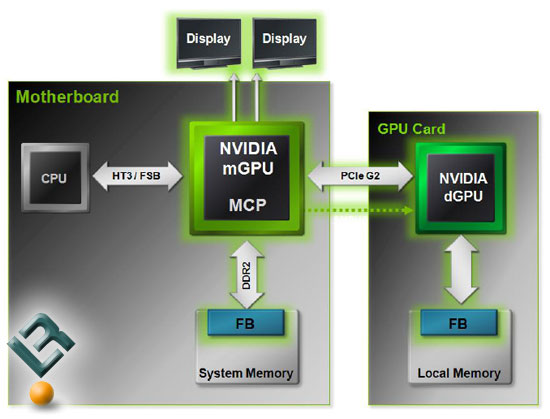
The GPU (Graphical Processing Unit) is similar to the CPU however it deals with the graphics of the system specifically, this is a vital component in all gaming platforms, especially in modern-day games where graphics are very demanding, the graphical processing requirements have increased tremendously from the first 120Mhz GPU released in 1999 through to the 853Mhz GPU used in the current generation Xbox One, however there are much more powerful GPUs available for computers, such as the Nvidia Titan.
GPUs are constantly increasing in power and reducing in size, as expected from Moores law. However the biggest problem for increasing performance and reducing size in GPUs is keeping them cool at the same time, as processing so many inputs at the same time can cause the GPU to overheat quite easily.
A fairly recent technology is the APU (Acecelerated Processing Unit), this takes aspects from both the GPU and CPU to combine it into one unit which uses much less power and doesn't compromise performance too much. APUs will never hit the benchmarks a dedicated CPU or GPU can separately, however it doesn't hit too far off and the power consumption is so much lower that this is ideal for mobile gaming platforms such as handheld consoles and mobile phones, this will largely extend battery life or allow this additional power to be used with other technologies.
One of the first consoles to use a form of APU is the PS4, it has an AMD Jaguar APU, with 8 cores. This is also paired a AMD Radeon GPU to provide efficient and powerful graphical support for the PS4, since gaming platform are no longer built to 'just play games', they need a workable CPU to process the many other functions gaming platforms offer in the modern day, such as streaming movies.
The below images show some examples of CPUs, GPUs and APUs as well as how they work.


Memory & Storage
There are a variety of different ways gaming platforms store information, this has only changed in the recent generation as the internet has become so prevelant, this means that some games aren't installed from a traditional disk but are instead downloaded to the platform, it also means that, for online games, the entire game isn't always required to be installed, it's possible to play with only a percentage of the game installed as the rest can be loaded virtually over the internet.
Gaming platforms rely on two main stores of memory, the HDD (Hard Disk Drive) and RAM (Random Access Memory). RAM allows games to run smoothly and the HDD allows media to be stored locally on the platform, which means the disc may not be required to play a game every time.
The RAM seen in two of the most popular consoles help...
Memory & Storage Continued...
...benchmark what the RAM provides in terms of performance, the Xbox One uses 2133MHz DDR3 RAM whereas the PS4 uses 5500 MHz GDDR5 RAM, this additional clock speed on the PS4 RAM gives the PS4 a huge advantage of 176GB/sec internal bandwidth as opposed to the Xbox One's 68.3GB/sec, this is because the PS4's RAM is at a much high clock speed and is using GDDR5 RAM (Double Data Rate type-5 synchronous memory) which is a modern type of RAM that is specifically designed for working with graphics cards and consoles, whereas the Xbox One only uses DDR3, this is more commonly seen in desktops as it's synchronised by the clock speed and isn't as fast as the GDDR5 seen in the PS4.
Despite the PS4 clearly having an advantage in RAM, the Xbox One does have 32MB of SRAM (Super-Fast Embedded RAM), thich provides a total of 204GB/sec ...
...bandwidth when used properly as a cache, however this relies on the developers of the Xbox One's games to utilize this function effectively.
s The other form of storage, as previously mentioned, is the HDD, the HDD is used to permanently store information, specifically media in gaming platforms, a HDD is compromised of a Hard Disk that spins very fast with an arm reading and writing information to and from it, this is slowly being replaced by digital SSD's (Solid State Drive) which don't use any moving parts, this is much faster than HDD's data rate and are less likely to get damaged or corrupted, the current generation of consoles provide 500GB internal storage and do allow for some expansion, however PC's have the cutting edge storage options as these can offer over 1TB customiseable and upgradeable, this is also due to the fact that PC's aren't just used for gaming.
Sound & Video Displays
The sound and display of gaming platforms are extremely important and must be considered when developing games along with designing gaming platforms.
Modern gaming platforms are equipped with sound cards, allowing for games to send sound to an output, such as headphones or a TV/monitor, this is done by converting from digital information to analogue, referred to as a DAC, to receive sound, such as someone talking on a microphone the sound card uses a DAC (Digital-to-Analogue) converter with a PCI (Peripheral Component Interconnect) interface to connect with the motherboard, however in more modern sound cards CODECs are used, which perform both the function of the DAC and ADC chips, this can then output sound through a variety of methods, such as a HDMI or AUX port.
It's also important for gaming platforms to provide video cards to enable games to run with reasonable graphics, most current generation consoles support a decent level of graphics at a similar standard, the most deviation in graphics support for games are seen in the computer gaming platform, where some computers may use a dedicated graphics card or an integrated video card, the dedicated graphics card involves having dedicated memory for the GPU, independant of the system RAM, this means that the dedicated graphics cards are much more ideal for supporting high-demanding games such as Crysis. However integrated GPUs do usually support these games, just at a much lower detail as they rely on the systems RAM to function effectively...
...The PS4 is supplied with an equivalent of a Radeon HD 7870 GPU whereas the Xbox One offers a Radeon HD 7790, the PS4 marginally out-performs the Xbox One based on the graphics card due to the PS4 having 18 CUs (Compute Units) as opposed to the Xbox Ones 12 CUs, the Xbox One also reserves 10% of the GPU for Kinect, which is a huge chunk to be used by default, this means that PS4 developers can supply slightly more graphically-powerful games.


Network Connectivity & PSUs
From the dawn of gaming there has always been the interest in multiplayer and 'social' gaming, from two player pong to MMO (Massively Multiplayer Online) games that enable thousands of players to play together across the internet, with this huge interest in multiplayer gaming it's very important that gaming platforms enable some form of network connectivity.
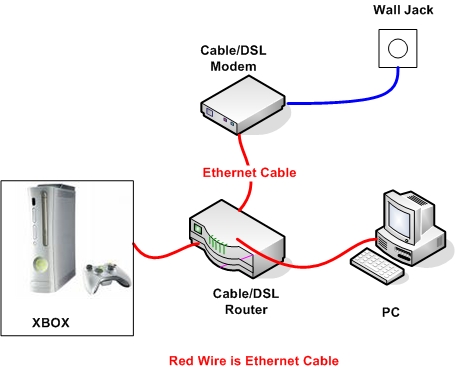
Most gaming platforms have two routes for connecting to the internet, either via a wireless network or directly to a router with a ethernet cable, the current generation consoles offer the latest 802.11 b/g/n wireless network ability, this is one of the fastest ways to connect to a wireless network and transmit data effectively, althought it's not as effective as a wired connection straight to the router...
... When playing online games a good, stable internet connection is vital for gameplay. This means that the broadband connection provided is of a high enough quality and has reasonable upload/download speeds in order to send and receive data to the games servers, more importantly is the latency between the game server and the players router. Latency, often referred to as 'ping' or 'lag' can ruin gameplay and make online games unplayable as it's the delay between your input reaching the game servers, in most games you need to react quick to situations, high latency prevents this, unfortunately lag is often produced due to the players location or setup and not due to poor game servers, to combat this a wired connection is suggested and a fibre-optic connection is ideal...
.. PSUs (Power Supply Unit) are also very important with any system, arguably the most important part as none of the other components can function without power. The PSU used need to convert the household AC (Alternating Current) power supply into a DC (Direct Current) voltage, this is because gaming platforms need a constant power supply to function as they're executing processes at every millisecond and the power-outage that AC would briefly provide would disrupt this process as the AC alternates between postive and negative charge. This is done by using a power transformer, the transformer uses diodes wrapped in an insulation acting as a rectifier, with two coils next to them creating a magnetic field, the amount of times the wire is coiled depends on what AC to DC conversion needs to be done. This is particularly important when purchasing a PSU for a computer, as the components power consumption can vary, some desktop setups may require a 500W PSU, others may need a 750W PSU.

Controllers & Interfaces
Game platforms require some form of interface and controller to enable human interaction, to provide this most consoles follow a similar layout, including dual analogue sticks, a D-pad (Directional Pad), shoulder buttons and several general buttons, these controller layouts are designed to be ergonomic and provide enough different inputs for a game developer to take advantage of, the only difference in controllers are the Wii's Wii remote, which also features great motion reading ability and acts as 'wand' that can be used to detect the positioning of the player and the other being the computers keyboard and mouse, the keyboard and mouse aren't designed for just gaming but there are controllers available to use with the computer along with joysticks and steering wheels for more immersive gameplay...
...Most controllers for gaming are now wireless and come with rechargable batteries, this design is to suit most living rooms as often the sofa (where the game is played from) is quite far from the TV (where the console sits).
Along with controllers, there's also very important interfaces provided with all gaming platforms as the players need to be able to have input into something, otherwise the controllers would be obsolete! The interfaces have changed dramatically over the years on all platforms, the PS4 has been more streamlined and updated to work seamlessly and easily, the Xbox One now runs an adaptation of Windows 8.1, which allows for easy, multi-purpose use of the Xbox. However the most changed interface over the decades would have to be the desktop PC, this interface is defined in an operating system, which is updatded quite often, the current transition from...
...Windows 7 to Windows 8 has brought some of the biggest changes. However, overall the interface of all the systems are designed to allow multi-use of other applications, such as Netflix and streaming software as well as smaller games from the relevant platforms online App store, these interfaces are usually quite bright in colour and very user-friendly to suit a very wide target audience.


To conclude, there is a large variety of components found in all gaming platforms, I've explained the main components featured within gaming platforms and how they interact with eachother, these components are constantly improving in performance and efficiency!
Thanks for reading!